How To Tell If Your Misfire and Flashing Check Engine Light Are Caused by a Bad Ignition Coil or Bad Spark Plugs
August 31, 2026
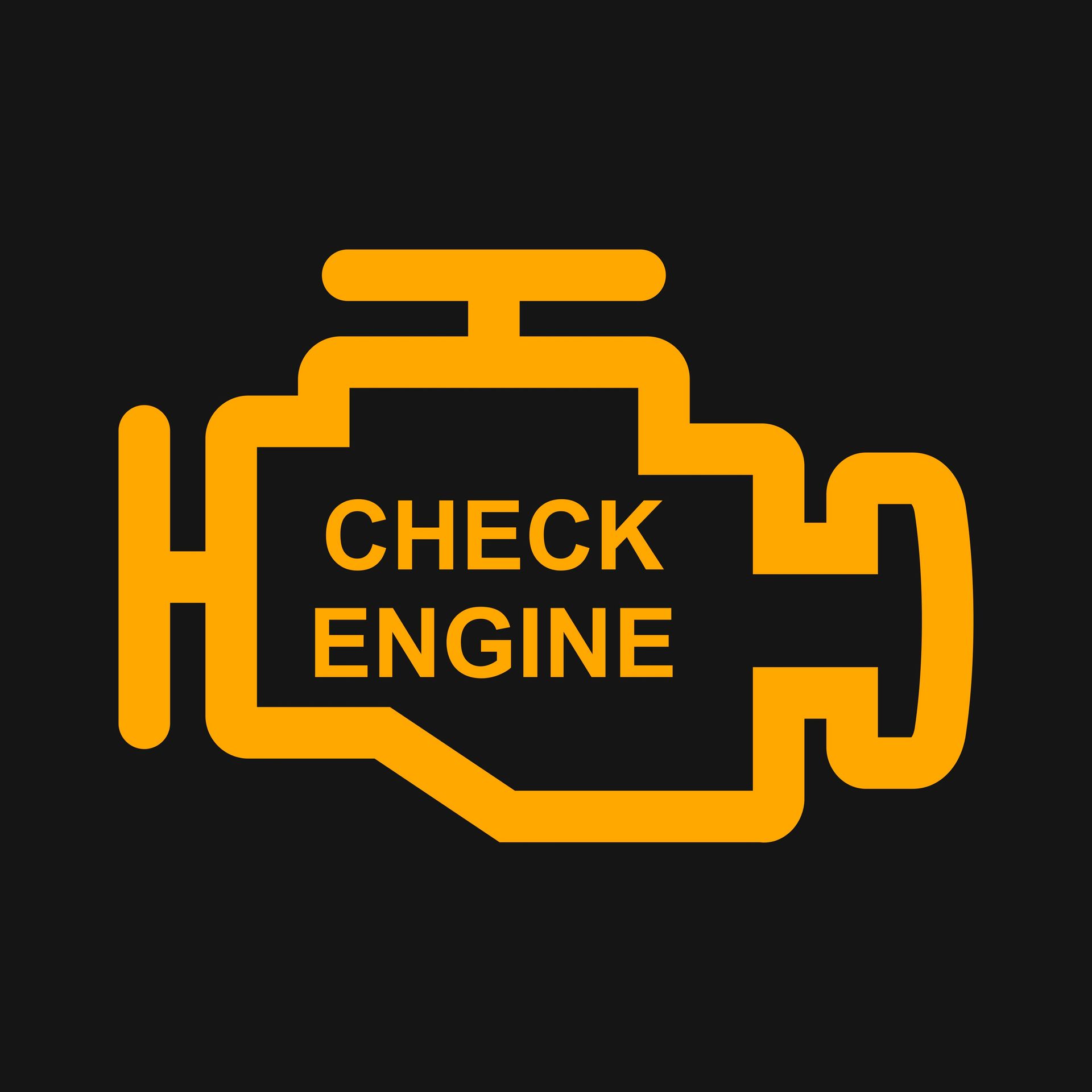
A flashing check engine light changes the situation. That light usually means the engine computer is seeing an active misfire strong enough to send unburned fuel into the exhaust. Keep driving it hard, and the catalytic converter can overheat quickly.
Ignition coils and spark plugs are two of the first things we check because both can create the same basic complaint: shaking, hesitation, weak acceleration, and a flashing light under load. The symptoms overlap, so the goal is not to replace both and hope for the best. We want to find which cylinder is missing and why.
A Flashing Light Points to an Active Misfire
A steady check engine light can come from hundreds of faults. A flashing light is much more specific. The computer has detected a misfire severe enough that continued driving can damage the catalytic converter.
You will often feel it at the same time. The engine shakes, power drops, and the exhaust note changes. Sometimes the light flashes only during acceleration and stops flashing when you back off the throttle.
When that happens, avoid hard acceleration and get the vehicle checked. If the engine is shaking badly, smells strongly of raw fuel, or has very little power, shutting it down is the better choice.
Worn Spark Plugs Usually Show Their Age Under Load
Spark plugs become harder to fire as their electrodes wear and the gap grows. At idle, a worn plug can still work well enough that the engine seems normal. Accelerate hard, climb a hill, or put more load on the engine and the weakness becomes obvious.
We commonly see worn plugs cause a misfire at higher cylinder pressure. The driver feels a stumble or bucking sensation, especially when getting onto the highway.
Service history helps here. If the plugs are well beyond their recommended interval and several show similar electrode wear, replacing them is a reasonable repair. Regular maintenance prevents the ignition system from reaching the point where every coil has to work harder just to fire worn plugs.
A Bad Coil Often Affects One Cylinder More Clearly
Each ignition coil creates the high voltage needed to fire a spark plug. When one coil starts failing, the misfire is often concentrated on the cylinder that coil serves.
Heat and engine load can expose a weak coil. We see cars that run well when first started, then begin missing after the engine compartment gets hot. Others misfire only during harder acceleration.
A failed coil does not always look damaged from the outside. Cracks, carbon tracking, or a burned coil boot are useful clues when they are present, but a coil can fail internally and still look perfectly normal sitting on top of the engine.
Scan Data Helps Us Find the Cylinder
The first useful step is figuring out which cylinder is actually misfiring. A scan tool can show stored misfire codes such as P0301 or P0302, along with live or recorded misfire counts on many vehicles.
That narrows the search immediately. If cylinder three is accumulating misfires while the others remain stable, we know where to focus.
At our shop, we also try to reproduce the condition that makes the light flash. A vehicle that only misses under acceleration needs to be tested under load. Letting it idle in the bay for ten minutes can completely miss the problem the driver came in for.
Moving the Coil Can Confirm a Coil Failure
On engines with individual coils, one of the most useful tests is moving the suspected coil to another cylinder.
Say cylinder two is misfiring. We move that coil to cylinder four, clear or monitor the misfire data, and run the engine again. If the misfire moves to cylinder four, the coil has given us a strong answer.
If the misfire stays on cylinder two, we keep looking. The spark plug, injector, wiring, compression, or another problem in that cylinder could be responsible.
That simple comparison is much better than replacing an entire set of coils because one cylinder is missing.
The Spark Plug Still Needs to Come Out and Be Read
Even when a coil looks suspicious, we want to see the spark plug. Plug condition can explain why the misfire started or show that another engine problem is involved.
During an inspection, we look at electrode wear, gap, porcelain condition, oil contamination, carbon buildup, and differences between cylinders. A plug soaked in oil tells a different story from one with a badly worn electrode.
We also check the plug well. Oil from a leaking valve cover gasket can collect around the coil boot and create a path for the spark to escape. In that case, replacing only the coil without fixing the leak leaves the new part sitting in the same problem.
Do Not Assume Every Misfire Is Ignition Related
Coils and plugs are common, but they are not the only causes of a flashing check engine light. A bad injector, vacuum leak, low compression, fuel-pressure problem, damaged wiring, or mechanical engine fault can produce the same basic misfire code.
That is why parts swapping has limits. If the misfire stays on the same cylinder after installing a known-good coil and plug, we move on to fuel delivery and mechanical testing.
Compression problems are especially important to rule out. No ignition component can fix a cylinder with a burned valve, damaged piston, or another internal problem.
Get Misfire And Ignition Service In Brunswick, GA, With 2EZ Automotive
If your check engine light is flashing and the engine is shaking, hesitating, or losing power, 2EZ Automotive in Brunswick, GA, can test the ignition coils, spark plugs, misfire data, fuel system, and cylinder condition to find the actual fault.